Most lists of what to check before travelling abroad have thirty items and no dates. They tell you to look at your passport, your visa, your vaccinations, your bank and your adapter, all with the same urgency, as if you could do them all the evening before you fly. You cannot. Half of them take weeks, and the one you forget is always the one that cannot be fixed at the airport.
A checklist that does not say when is a list of worries. The same items, sorted by how long each one takes, become a plan.
Three things decide what is on your list
Before ticking anything, notice that the items on a pre-trip checklist come from three different places, and that only one of them is the same for everybody:
- Your passport decides the entry rules. Two friends on the same flight can need completely different things to get in, because the rules depend on nationality, not on the ticket.
- The destination decides the money, the plugs, the health advice, the driving rules and the customs.
- You decide the rest: the medicines you take, what your insurance covers, the phone plan you are on, whether you are travelling with children.
That is why a generic list can tell you to check entry requirements but cannot tell you what they are. Nobody can, except the authorities who set them.
Entry requirements: check them for your passport, at the source
This is the one part of the list where a mistake ends the trip before it starts, and the one where rules change with little warning. So the question is not just what to check, but where. Go to the destination government's own website or its embassy, and to your own foreign ministry's travel advice for that country. Not a forum, not an article from two years ago, and not this one.
What you are looking for there:
- Whether your nationality needs a visa or an electronic travel authorisation, and how long either takes to be issued.
- How long your passport must still be valid, counted from the day you leave the country rather than the day you arrive, and whether it needs blank pages.
- The rules of any country you change planes in, even without leaving the airport.
- Whether you may be asked for an onward or return ticket, proof of accommodation or proof of funds.
- Extra documents for children travelling with only one parent or with other adults.
Check that the name on the ticket matches the passport letter for letter, and check the airline's own conditions as well: it can refuse to board you if it thinks you will be refused on arrival. Then write down where you read each answer and on what date, and look again the week you leave.
What to check before travelling abroad, and when
Here is the same checklist sorted by lead time. Start at the top as soon as the dates are fixed.
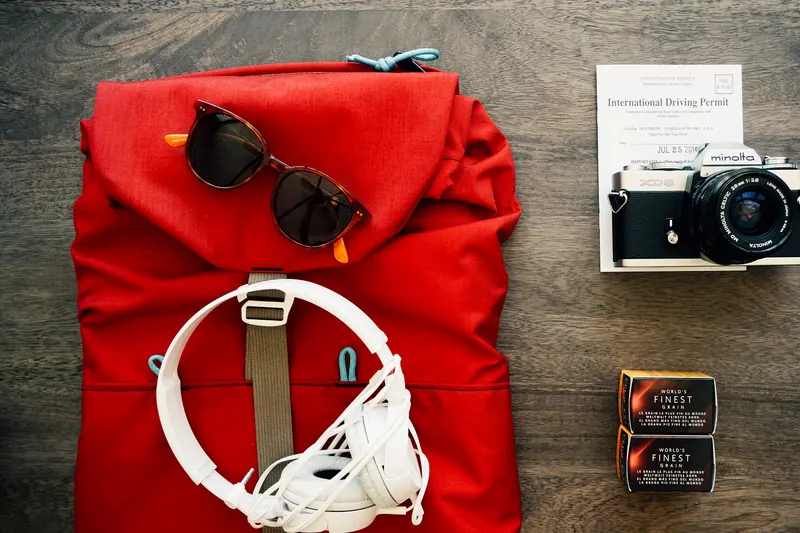
- Two months or more before. Passport validity and renewal, visa or travel authorisation, an appointment with a travel clinic (some vaccines need several doses spread over weeks), and an international driving permit if you will rent a car.
- Three to four weeks before. Travel insurance that covers medical care abroad and the activities you plan to do, your cards and bank settings, your phone plan or a local data option, and enough of any regular medicine for the whole trip plus a few days.
- The week before. Entry rules and travel advice again, the airline's check-in and baggage conditions, plug adapters, copies of your documents, and anything you need offline downloaded to your phone.
- The last 48 hours. Online check-in, flight times and terminal, how you get from the arrival airport to where you are sleeping, a little local cash or a known cash machine on arrival, and everything charged.
Most of the stress before a trip comes from discovering a two-month item in the final week. Sorted like this, the last few days hold only small things.
Money: make sure your cards will work there
The cost of the trip is a separate job, covered in how to calculate a travel budget day by day, including the fees for paying by card abroad. What matters here is simpler: being able to pay at all on the first evening.
- Check that your card network is widely accepted at the destination, and how much people there still pay in cash.
- Look at your bank's settings for use abroad and your daily limits for payments and withdrawals.
- Take two cards and keep them in different places, so one lost wallet does not leave you with nothing.
- Arrive with enough local cash for the first transfer, a snack and a tip, or know exactly where you will take it out.
- Save the number to block your cards somewhere that is not your phone.
Health and medicines
Which vaccines or precautions a destination calls for depends on the place, the season and your own history, so leave that to a travel clinic or your doctor and book them early. Your part is the paperwork around your own medicines. Carry them in their original packaging with a copy of the prescription, keep them in your hand luggage, and check with the destination's embassy whether any of them is restricted there: some medicines that are routine at home are controlled elsewhere.
Write down the local emergency number and the address of the nearest hospital to where you are staying. If you are travelling with small children or a condition that shapes the days, planning a trip around real constraints goes into that side in more detail.
Plugs, phone and staying connected
- Look up the plug type and the voltage. Most phone and laptop chargers accept anything from 100 to 240 volts and only need an adapter; a hair dryer or a straightener may need a converter, or may be better left at home.
- Ask your phone provider what roaming costs in that country, and compare it with a local SIM or an eSIM if your phone supports one.
- Download the maps of the area, your tickets, your booking confirmations and the address of where you are staying, written in the local script if it uses another alphabet.
- Keep a photo of your passport in a place you can reach without your phone, and a paper copy apart from the passport itself.
Local rules you could break without knowing
A short read of your foreign ministry's page on the destination usually covers the things travellers get wrong in good faith: how to dress at religious sites, where photography is not allowed, whether drones need a permit, what tipping is expected, which everyday items are illegal to carry or bring in. Ten minutes of reading saves you from finding out at a checkpoint.
Put the answers on one page
When the list is done, keep the answers together rather than scattered across emails and tabs: entry requirements with the source and the date you checked, the insurance number and its emergency line, the card-blocking numbers, the embassy address, the local emergency number and where you are sleeping on the first night. One page you can find in a minute is worth more than a perfect list you cannot.
Traveley puts a version of this inside each trip, in its Before you go section: money, entry requirements, health, plugs, getting around, staying connected and local customs, written for the passport country you give it. It says when it is unsure about entry rules and links you to an official source, which is how any summary of entry rules should be used: as a map of what to check, with the official source having the last word.
Let Traveley plan the days
Tell it where you are going and it builds the whole trip — free to start, no account needed.
Get it on Google Play